Items
-
Report of the human rights situation in South-East Turkey: July 2015 to December 2016
Information concerning the Turking government's treatment of the Kurdish population including a summary and conclusion.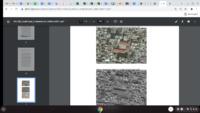
-
Mapping Prejudice
A digital history project that tracks and maps properties with racially restrictive restrictive covenants and Holc maps that redlined neighborhoods around the U.S.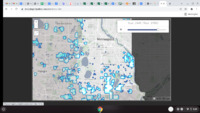
-
How to See a City? Photography, Maps, Big Data, and Visualization with Dr. Lev Manovich
19th and 20th-century painters, photographers, filmmakers, and geographers created many different methods to represent city life and the everyday. In the 21st century, artists and scientists introduced additional approaches using new types of urban data and sensors (e.g., social media posts, sensor networks, satellite imagery, etc.). Manovich sketches the evolution of city representation from the 19th century until today and discuss a number of important projects created in the last 15 years. -
CHRONO-CARTOGRAPHY OF THE 1871 PARIS COMMUNE
This article is built on five chapters that distinguishes each component of the map which is a comprehensive “chrono-cartography” of the 1871 Paris Commune. -
Spatializing Genocide – Mapping Survivor Testimonies
This course project had students use StoryMaps to spatialize the lives and stories of survivors of the Holocaust. -
History Forge
This project incorporates census records, Sanborn and other historical maps, and crowdsourcing efforts to build interactive maps with different layers and detailed records to visualize the residents of Ithaca, Elmira, and Auburn, NY. They also compiled their records into searchable databases for all the buildings and census records they've transcribed. -
Refusing to Forget
This project brings awareness to the history of state-sanctioned violence and numerous violent events that occurred at the Texas-Mexico border between 1910 and 1920. They utilize archival materials to tell the story of individuals whose lives were affected by the violence, create exhibits, apply and install historical markers, and more. -
Turkey: Displaced and Dispossessed
In July 2015 when a two-year ceasefire broke down, Sur – the historic central district of Diyarbakır – became the scene of the clashes in the city. Tens of thousands of people were forcibly displaced from Sur alone, while across the region the figure is likely to be around half a million. Concerns about how they would survive under round-the-clock, indefinite curfews, worries about their children’s education, limited access to food and healthcare, water and electricity shortages, and the use of heavy weaponry were among the main reasons for the ‘exodus’. But the fighting ended in March 2016, so why have the majority of residents not been able to return home? -
CONFLICT, PLANNING and DESIGN
This is a book titled CONFLICT, PLANNING and DESIGN. This book includes five essays discussing the issue from different perspectives, along with the design research studies conducted by METU Master of Urban Design (MUD) Graduate Studio in 2016-2017 Academic Term in the context of Suriçi, Diyarbakır under the title of ‘recovery urbanism’. The book is published bilingually in editorial preface and conclusion involving the abstracts of the papers in English as well as the explanations of the projects involved. -
Nathan Ciulla
I am focused on the development of railroads in British and Japanese colonies respective to each nations industrialization process. Although they seem like purely economic projects from the outside, railroads when used as colonizing tools in India, Kenya, South Africa and Korea provided a system of both material and internalized control.
-
Bilal Ali
How Pakistan International Airlines assist in the development of the nation-state of Pakistan?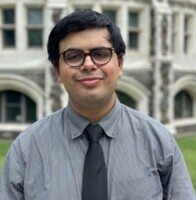
-
Kadir Sarp Sok
I am focused on forced migration, relief organizations, and the instrumentalization of refugees in the Late Ottoman Empire and the Modern Middle East.
-
Emine Esra Nalbant
I am a PhD student in Binghamton University Art History Department and one of the contributors of this project. I am from Ankara and did my MA in Istanbul. I am interested in lighthouses as maritime infrastructure network in Late Ottoman Empire.
-
Geoffrey Ramirez
I am a Ph.D. candidate studying popular culture and its effects on gender, sexual, and community identity formation in modern U.S. History. I have a background in Public History and working on digital projects, so I am committed to seeing more history projects embrace a variety of mediums to empower communities. Learning new tools for mapping, data linking, and programming was trying but worthwhile. Taking these skills into the future will prove invaluable in the field I seek to go into. Mapping and translating a physical space into a historical narrative is a crucial part of Public History, so it was wonderful to get experience with a project like this. I hope that Mapping Violence grows far beyond what we here could do within a month and the people of Sur get the recognition and support they need.
-
Benny Kellman's Excellent Bio
History and Hackysack
-
Mary Tuttle
Russian/Post-Soviet History; Eastern European Immigrants; Digital Humanities
-
Man Joong Kim
Transnational History, Urban History, Architecture, Film,
-

-
A fisherman with sunset
Fisherman in the river under the sunset -
Jenna Bonner
I focus on the history of gender and sexuality in early America. The bulk of my work and research has been more specifically over queer histories, with my most recent project centering on the connection between gender, language, and theology in the Society of the Publick Universal Friend during the Revolutionary and New Republic eras. I am interested also in broader Atlantic histories, histories of the US South, and modern LGBTQ+ histories, among many others.
-
Online Database of Ming Shilu, Qingdai Shilu and Joseon Korea (Veritable Records of Successive Reigns of the Ming, Qing Dynasty and Koseon Korea)
(Shilu) is succeeded new emperor set up veritable records office (Shilu guan) to record what achievements the Ex-emperor did. It's a chronicle official book which responded by the Grand Secretariat (Neige) ministers. The Qing Shilu was the most unique one because they were translated into Chinese, Manchu and Mongolian languages three kinds of text after the final. -
The cry of a shackled lion
Sculpture with Brass -
Omeka S Tutorial
A tutorial on Omeka S led by members of the Spatial Humanities Working Group at Binghamton University